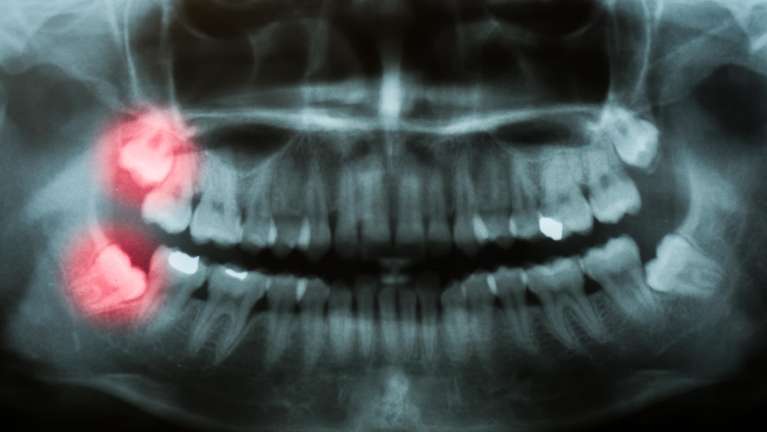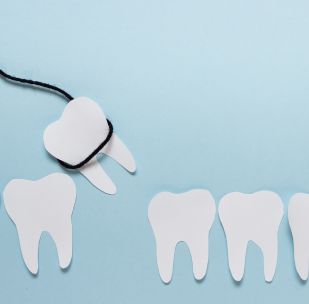
At Evolve Dental Care, the process of extracting a tooth is straightforward. Your comfort is our priority, so we'll help you get comfortable in your chair and offer you a pillow and blanket. We don't want you to feel any pain during your extraction, so we use a local anesthetic to numb the tooth. The affected tooth is then carefully and skillfully removed by Dr. Amir or Dr. Sunny.
We ask that you please let us know at any point if you're uncomfortable, and we'll administer more anesthetic. To help you relax, we also offer nitrous oxide (laughing gas), a mild type of sedation that makes you feel calm and drowsy during the procedure.
Sedation Dentistry in Allentown Assures Your Comfort
There's no reason to fear any dental procedure when we can help you relax with sedation dentistry with nitrous oxide.
Also known as "laughing gas," nitrous oxide is widely used during tooth extractions to help patients relax. Nitrous oxide at our Allentown, PA dental office effectively keeps you calm for the duration of your procedure but has no lingering drowsy side effects. We mix nitrous oxide with oxygen and have you inhale it through a small nasal mask, and the soothing effects usually take hold in moments.
You will feel very calm and relaxed and experience a strong sense of comfort and well-being. One of the benefits of nitrous is that its effects end just as quickly. So you'll be able to leave our dental office after your appointment and drive yourself home safely. Nitrous oxide is also perfect for kids who are anxious about being at the dentist or who might have to sit still for a lengthy procedure.
If you are anxious about an upcoming dentist appointment, give us a call to learn more about nitrous oxide offered at our Allentown, PA dental office.
When the root of your tooth is present, it stimulates the growth of bone around it and helps maintain its strength, density, and shape. If a tooth and its roots are lost, the bone will start to deteriorate over time. It is estimated that there is a 25 percent decrease in the width of bone in the first year after tooth loss.
Maintaining bone density in your jaw is essential, especially regarding the type of prosthetic you choose to replace the missing tooth. Dental implants require a sufficient amount of bone in the jaw for successful placement.
If you choose a fixed bridge and the bone starts to shrink, a noticeable gap will develop between the artificial tooth and your gum. Dentures also perform better with more supporting bone in your jaw.
While we're in the planning stages for your extraction, we'll talk about your options for replacement. If appropriate, we can also talk about the possibility of bone grafting to build up and support the bone in your jaw after extraction.



 dentist in Allentown

 Impaction or Overcrowding

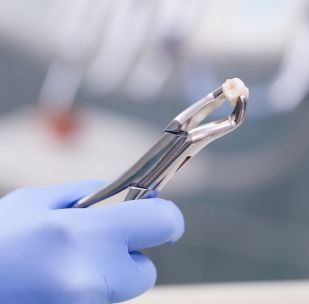 One of the most crucial things to remember about healing after an extraction is that you do not want to disturb the clot that forms at the extraction site. If the clot becomes dislodged, it can lead to a very painful condition called dry socket.